

Thailand and Cambodia Renew Ceasefire After Deadly Border Clashes, Says Trump
Written byTimes India
Share
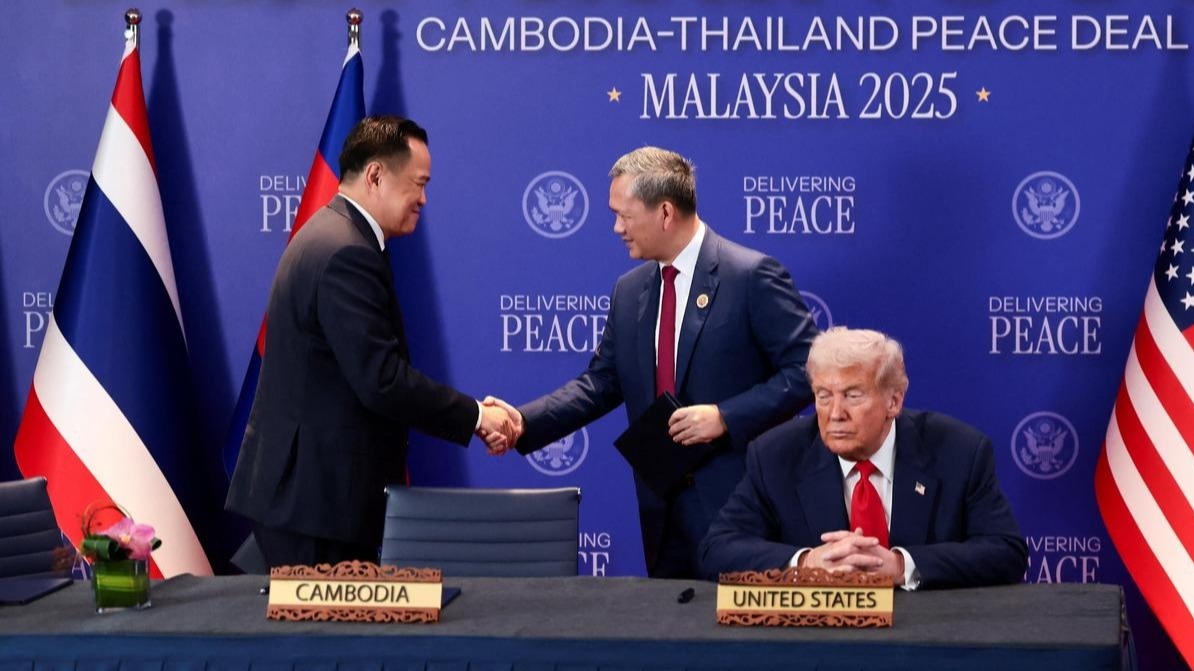
After days of deadly clashes along the Thailand-Cambodia border, leaders of both nations have reportedly agreed to renew a ceasefire, according to U.S. President Donald Trump. The announcement follows multiple skirmishes that left dozens dead, hundreds injured, and civilians displaced from contested areas.
Background of the Conflict
The border between Thailand and Cambodia has long been a site of tension, particularly around regions such as the Preah Vihear temple, which has been claimed by both nations. Sporadic clashes escalated in early December 2025, with both sides deploying troops, artillery, and airstrikes in an effort to assert control over the disputed territories.
In October 2025, a peace agreement mediated by Malaysia the Kuala Lumpur Peace Accord was signed to stabilize the region. Despite the accord, recent confrontations suggested that hostilities had reignited, prompting urgent diplomatic intervention.
Trump’s Announcement
In a social media statement, President Trump said he spoke separately with Thai Prime Minister Anutin Charnvirakul and Cambodian Prime Minister Hun Manet, both of whom agreed to cease all shooting effective immediately and revert to the terms of the earlier peace accord. Trump credited Malaysian Prime Minister Anwar Ibrahim for assisting the diplomatic effort, calling it a “success in restoring peace along the border.”
While Trump framed the renewed ceasefire as a diplomatic victory, reports from the ground indicate that tensions remain high, with sporadic exchanges continuing in certain contested areas. Both Bangkok and Phnom Penh have yet to provide comprehensive confirmation of a full ceasefire, highlighting the fragility of the agreement.
Impact on Civilians
The clashes displaced thousands of civilians, many of whom sought shelter in nearby towns and villages. Humanitarian agencies have expressed concern about the short-term and long-term impact of the conflict, including disruptions to agriculture, education, and essential services along the border.
The renewed ceasefire, if implemented fully, could provide relief to affected populations, allowing residents to return home safely and resume their daily lives.
Regional and Global Reactions
Analysts suggest that the ceasefire demonstrates the critical role of international mediation in resolving regional conflicts. Malaysia’s involvement and the public support from a global figure like Trump underscore the importance of diplomacy in Southeast Asia.
Experts caution, however, that lasting peace will require ongoing monitoring, verification, and dialogue to prevent further skirmishes. The international community, including ASEAN members, is likely to play a supportive role in ensuring compliance and addressing underlying territorial disputes.
Looking Ahead
While the announcement offers a glimmer of hope for stability, observers stress that continued vigilance is necessary. Both Thailand and Cambodia face pressure to de-escalate tensions, honor the terms of the ceasefire, and engage in constructive dialogue to achieve lasting peace along their shared border.