

MGNREGA Renaming Row: Rahul Gandhi Accuses BJP of Targeting Gandhi Legacy
Written byTimes India
Share
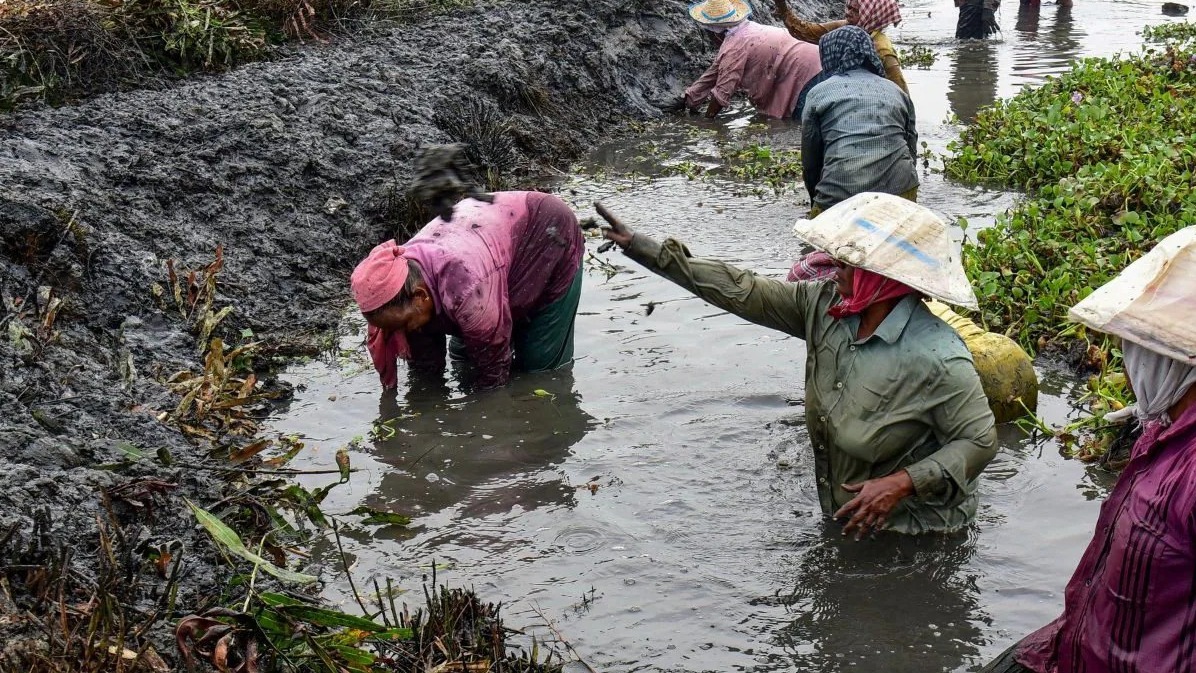
A fresh political controversy has erupted over the proposed renaming of the Mahatma Gandhi National Rural Employment Guarantee Act (MGNREGA), triggering a sharp war of words between the Congress and the BJP. While the Congress, led by Rahul Gandhi, has accused the ruling party of attempting to erase Mahatma Gandhi’s legacy, the BJP maintains that the move is a pragmatic administrative decision aimed at better governance rather than political symbolism.
Rahul Gandhi’s Criticism
Rahul Gandhi strongly criticised the proposal, calling it a direct assault on Gandhi’s ideals and legacy. According to him, MGNREGA is not merely a welfare scheme but a symbol of dignity of labour, social justice, and rural empowerment, values closely associated with Mahatma Gandhi.
He alleged that the BJP has consistently tried to rewrite history and remove references to leaders who do not align with its ideological worldview. “This is not just about a name. It’s about removing Gandhi’s philosophy from public policy,” Rahul said, adding that the scheme has been a lifeline for millions of rural families, especially during economic distress and the pandemic.
BJP’s Response
The BJP rejected these accusations, stating that the Congress was indulging in political fear-mongering. Party leaders argued that renaming or restructuring government schemes is part of administrative reforms and does not diminish the contribution of Mahatma Gandhi.
According to BJP spokespersons, the focus should be on effective implementation, transparency, and outcomes, rather than the name of the scheme. They also accused the Congress of using Gandhi’s legacy as a political shield to distract from governance issues and alleged inefficiencies in how the scheme was managed during previous regimes.
Why MGNREGA Matters
Launched in 2005, MGNREGA guarantees 100 days of wage employment to rural households and has been one of India’s largest social security programmes. Over the years, it has played a critical role in poverty alleviation, rural infrastructure development, and income support, particularly during crises such as droughts and economic slowdowns.
Because of its scale and impact, any change related to MGNREGA be it funding, structure, or name inevitably attracts political scrutiny.
Political Symbolism vs Governance
Political analysts say the debate reflects a larger ideological clash between the Congress and the BJP. For the Congress, Gandhi remains central to its political identity, while the BJP has often emphasised performance-driven governance over symbolic associations.
Critics of the renaming argue that altering the name could dilute the historical and moral context of the scheme. Supporters, however, believe that policy effectiveness should not hinge on personalities, but on measurable outcomes and accountability.
What Lies Ahead
As the debate intensifies, the issue is expected to resonate in Parliament and beyond, particularly among rural voters, for whom MGNREGA remains crucial. Whether the proposal moves forward or is stalled by political resistance, the controversy highlights how welfare policies in India often become battlegrounds for ideological narratives.
The MGNREGA renaming row underscores a familiar political divide legacy versus reform, symbolism versus governance. As Rahul Gandhi and the BJP continue to spar, the larger question remains whether such changes genuinely improve policy delivery or merely deepen political polarisation.